
LEARNING FROM LETTERS
by Susan Chenelle
Some people collect stamps from certain countries, stamps printed during a particular period of time, or stamps with pictures on them of things that they like. I collected stamps when I was younger—my favorites were Disney stamps from places like Antigua, Barbados, or Grenada or stamps commemorating the history of space exploration. While more recent stamps, like the ones I collected, often have never been used, older ones usually have been "cancelled," meaning that a rubber stamp has been imprinted on them, telling where and when the stamp was used to mail something. Though stamps are often bought or traded by themselves, if a stamp has been cancelled, that means it was, at one time, attached to a letter—and sometimes it still is. While we can learn a lot about history from the stamps themselves, the letters and postcards they are attached to have stories of their own.
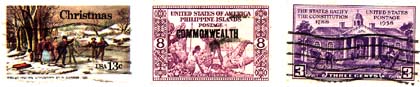
Mr. Robert F. Welt, a social studies teacher at Fitch Middle School in Groton, Connecticut, has introduced his students to the historical mysteries of stamp and letter collecting through his Stamp Club. During their "flex" period, students work on projects relating to stamps or letters in Mr. Welt's collection. Many of the letters were exchanged between members of the same family, and by reading and studying them very carefully Mr. Welt's students have been able to learn a lot about the history of these families, some of whom migrated west through the Ohio Western Reserve, and life in the late 1700s, 1800s, and early 1900s.
Jamie, who is studying letters written by the Perry family, describes the beginning of the process:
"When I first got the box full of letters, I had to put them in chronological order. Then I wrote down basic information like the day and date of the letter, and a summary about the letter on an analysis sheet. This is all put and kept in a folder with plastic sheets to protect and organize the letters and information. After doing all this, I go back through the letters and I try to find as many family relationships as I can. I am listing them on paper for now, but after I list them I will probably make a family tree to connect the relationships together. This will also make it easier to read. Reading through these letters and finding family relationships is a great way to learn about history!"
Because a person's handwriting is often very difficult to read, especially handwriting styles from a long time ago, students also transcribe the letters. Once they have learned as much information as possible from a letter itself, the students then compare it with what they have learned from other letters. This can be very confusing, because different letters sometimes contradict each other. For example, one letter might indicate that John is Jane's husband, while another might make it seem like John is Jane's son. Also, since there weren't fixed spellings of words and names in previous centuries, people spelled them by how they sounded and often shortened them by leaving out unnecessary vowels or consonants. Sometimes it takes comparisons of several letters to sort things out.
Mr. Welt's students often find more questions than answers after studying these letters. When this happens, students have to go beyond the letters and look for more information elsewhere. One of the important distinctions Mr. Welt teaches his students is the difference between primary and secondary sources. The primary sources, in this case, are the letters themselves. Secondary sources are books or articles—such as a history book (or a Web site!) on the migration of Connecticut Yankees—written about primary sources and the information they contain.
Historical societies are great places to find both primary and secondary sources. While researching letters of the Barrows/Corbin family, Amy has "written to the Union Historical Society twice and gotten a reply both times." She says that "the first time we received no new information, but the second time, we found out from the president of the society that they had a record of Mrs. Corbin in the society's building as being a member of the Union Grange.... I have learned quite a bit more about U.S. history from using primary sources than I could ever have from some hot shot history book."
One of the families Mr. Welt's students have studied extensively is the Woodbridge family.
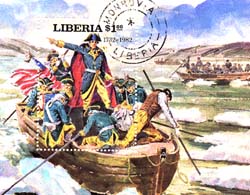
Picture credits: Stamps reproduced on this page are courtesy of Robert Welt.
Author's Note: Susan Chenelle was born and raised in the southwest suburbs of Chicago. She earned her B.A. in English from Kenyon College (Gambier, Ohio) in 1996 and now teaches high school English and journalism in a New Jersey high school. A former editor at Citysearch, her writing has appeared in Bitch, Z and Clamor magazines, Kirkus Reviews, and the Indypendent, and Newyorkmag.com and is archived at http://srcnwk.wordpress.com.